

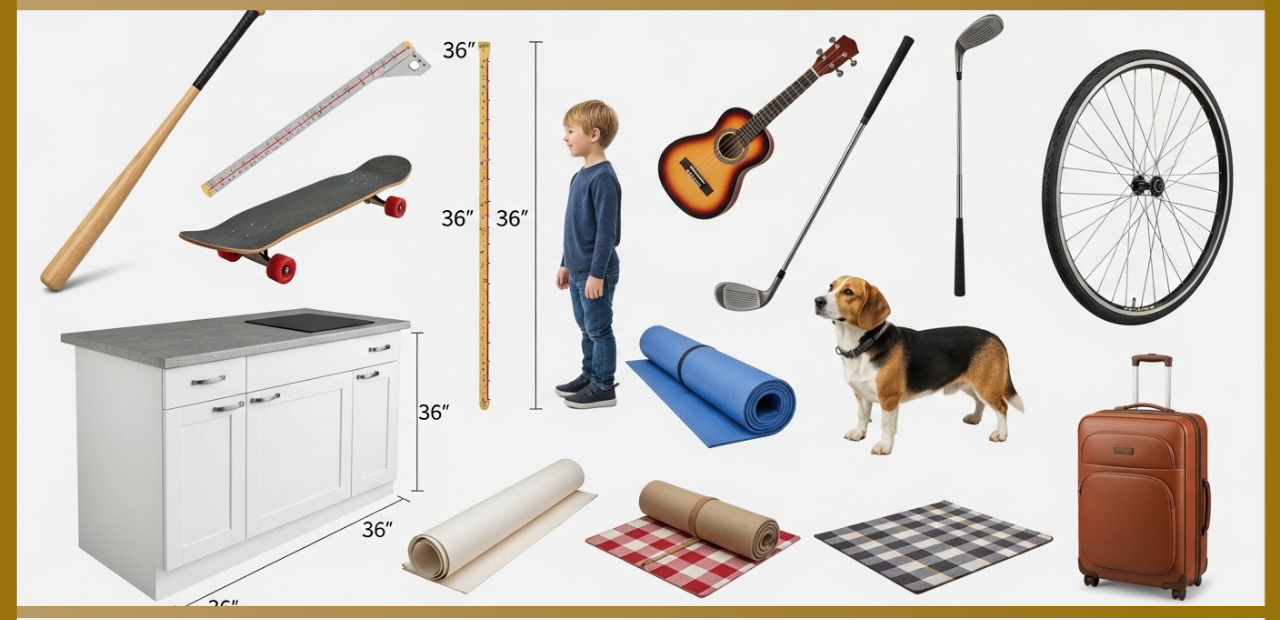
There’s somthing oddly human about trying to understand size without grabbing a ruler. Somebody says, “It’s about 36 inches,” and suddenly your brain starts opening dusty little drawers of memory.
You picture a guitar leaning against a wall. A kitchen counter you bumped your hip into at midnight while looking for cold pizza. Maybe even the length of a child sprawled sideways across a couch, refusing bedtime like a tiny dramatic emperor.
And honestly, how long is 36 inches really? On paper, it sounds mathematical, stiff even. But in real life, it’s everywhere. It’s the invisible rhythm inside homes, sports gear, workshops, architecture, and even the way humans naturally move through rooms.
The measurement quietly sneaks into daily life because it sits in this weirdly perfect middle ground not too small, not too huge. Just… human-sized.
In fact, 36 inches in feet equals exactly 3 feet, which also equals 1 yard or 91.44 centimeters in metric measurements. That’s one of those rare conversions people accidentally remember from school even when they forgot literally everything else.
It belongs to both imperial measurements and modern measurement systems in a way that still shapes homes, furniture, and sports today.
The funny thing is, many designers and engineers didn’t randomly choose this size. A lot of it comes from anthropometric standards, ergonomics, and human factors engineering. In simple words? Humans are kinda built around this dimension.
Or maybe this dimension was built around humans. Depends which philosopher you ask after two coffees.So let’s wander through some surprisingly familiar, wonderfully ordinary things that measure around 36 inches tall, wide, or long.
| Thing/Object | Approx. Size | Why It’s Common |
|---|---|---|
| Kitchen Countertop Height | 36 inches | Standard for comfortable cooking and kitchen ergonomics |
| Traditional Yardstick | 3 feet / 1 yard | Used for measuring in workshops and schools |
| Acoustic Guitar | Around 36 inches long | Common full-size guitar length |
| Interior Door Width | About 36 inches wide | Supports accessibility and smooth movement |
| Coffee Table | Around 36 inches long | Fits well in most living room layouts |
| Baseball Bat | Up to 36 inches | Used by powerful hitters in baseball |
| Toddler Bed Width | About 36 inches | Comfortable size for small children |
| Shower Curtain Panel | Around 36 inches wide | Common modular bathroom size |
| Golf Clubs | Around 36 inches | Standard size for some clubs |
| Hockey Stick | Near 36 inches | Used for youth and shorter player setups |
| Window Blinds | 36 inches wide | Matches standard home window sizes |
| Walking Stride | Close to 36 inches | Natural stride length for many adults |
| Yard of Fabric | Exactly 36 inches | Standard textile measurement |
Why 36 Inches Feels Weirdly Natural to Humans

Before jumping into the list, it helps to understand why this number keeps appearing like an uninvited but useful guest.
A human-scale dimension like 36 inches matches many natural body relationships. It’s near average waist height for adults. It fits within comfortable reach zones. It supports smooth spatial flow inside rooms and allows easier maneuverability when moving around furniture or doorways.
Architects use it constantly in building measurements because humans need comfortable clearance space. That’s why so many accessibility routes, walkways, counters, and furniture pieces hover around this measurement.
One interior designer once joked:
“If homes could breathe, 36 inches would probably be the size of the lungs.”
Bit dramatic maybe, but honestly not wrong.
Standard Kitchen Countertops
One of the most famous 36 inches example measurements is the humble kitchen countertop.
Most standard countertop height setups are exactly 36 inches from the floor. This became common partly during the Post-WWII housing boom, when manufacturers wanted consistent dimensions for fast home construction.
It also aligned beautifully with average adult waist height, helping reduce back strain during cooking.In modern interior design, this measurement supports better kitchen ergonomics and smoother workflow between sinks, cabinets, and appliances.
A counter lower than this can make chopping vegetables feel like apologizing to your spine. Higher counters, meanwhile, start turning sandwich-making into shoulder workouts nobody asked for.
Interestingly, both the American kitchen and even some modern German kitchen layouts heavily standardized around this size because it balanced comfort and efficiency.
So next time you lean against a countertop scrolling your phone while waiting for noodles to boil, you’re leaning against decades of design efficiency and historical standardization.
A Traditional Yardstick
This one feels obvious but still oddly satisfying.
A traditional yardstick measures exactly 1 yard, or 36 inches. It’s one of the oldest practical measuring tools still casually hanging in workshops, classrooms, and garages.
Historically, rulers and yard measurements trace back through European systems influenced by rulers like King Edward I, who helped standardize certain English measurements centuries ago. Humans really spent thousands of years arguing over lengths before agreeing, “Yeah alright, this stick seems fine.
In many DIY projects, a yardstick still beats digital apps because it gives quick physical perspective. You can instantly visualize space without unlocking your phone seventeen times because you forgot why you picked it up.
Acoustic Guitar
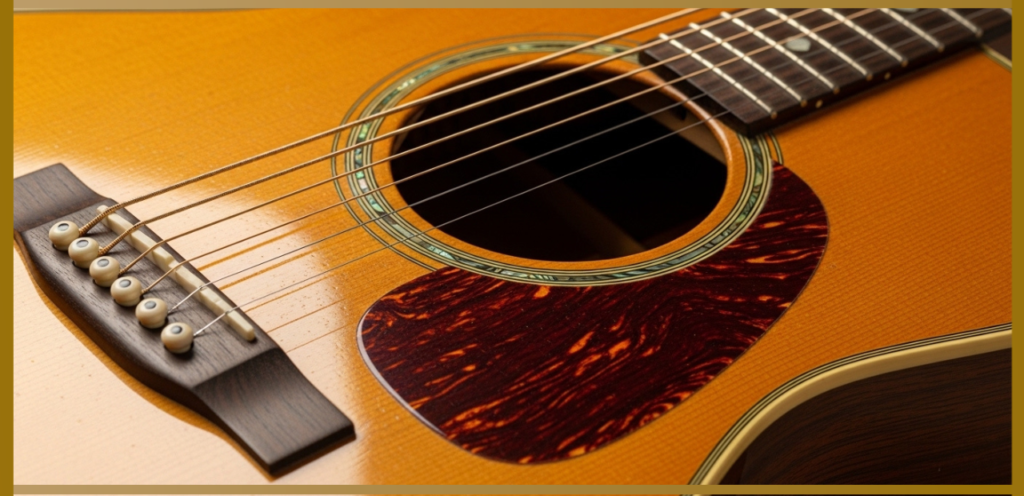
A full-sized acoustic guitar often measures close to 36 inches in total length.
That includes the guitar body, neck, and headstock together. The famous Spanish luthier Antonio de Torres helped define many proportions still used in the modern Spanish guitar, shaping what we now recognize as standard guitar dimensions.
The measurement isn’t random at all. It supports better playability, comfortable reach, and balanced sound resonance. Too small, and the sound gets thin. Too large, and suddenly carrying it feels like wrestling a wooden canoe through an airport.
Musicians often describe guitars almost like living creatures. A guitarist once told me:
“A good guitar doesn’t sit on you. It settles against you.”
Bit poetic maybe, but when a guitar fits naturally around the body, you kinda understand what he meant.
Interior Door Width
Many homes use roughly 36-inch-wide interior or entry doors, especially where accessibility compliance matters.
This size allows easier movement for wheelchairs, strollers, furniture, and humans carrying seven grocery bags because they refused to make two trips.
Modern building codes and universal design principles often recommend wider doorways for accessibility and smoother interior spacing. The measurement helps maintain proper walkways and safer movement between rooms.
In compact Japanese homes, space is often minimized differently, but even there designers carefully consider proportions for efficient movement and transitional spaces.
Door widths are one of those things nobody notices until carrying a couch diagonally while sweating like a malfunctioning faucet.
Coffee Tables
Many rectangular coffee table designs measure around 36 inches long.
Not all, obviously. Some are huge enough to land aircraft on. But 36 inches remains incredibly common because it balances furniture arrangement and room openness without overcrowding smaller spaces.
This matters deeply in space planning and room layout measurements. Designers constantly think about breathing room between furniture because cramped rooms create visual stress even when people don’t consciously notice it.
Minimalist styles like Scandinavian design often rely on moderate furniture sizes exactly for this reason.
A properly sized coffee table becomes part utility, part emotional geography. It’s where remotes disappear forever. Where tea mugs leave suspicious circles. Where toddlers launch crackers onto carpets with sniper precision.
Baseball Bats
Some professional-grade baseball bat models measure around 36 inches long.Power hitters like Aaron Judge or Giancarlo Stanton have famously used long bats to maximize reach and leverage.
Even legendary figures like Babe Ruth influenced discussions around bat size, swing speed, and raw power.In sports equipment design, length affects swing mechanics, balance, and reaction time. Longer bats can generate more force but require stronger control.
It’s basically physics disguised as sports.
Toddler Beds
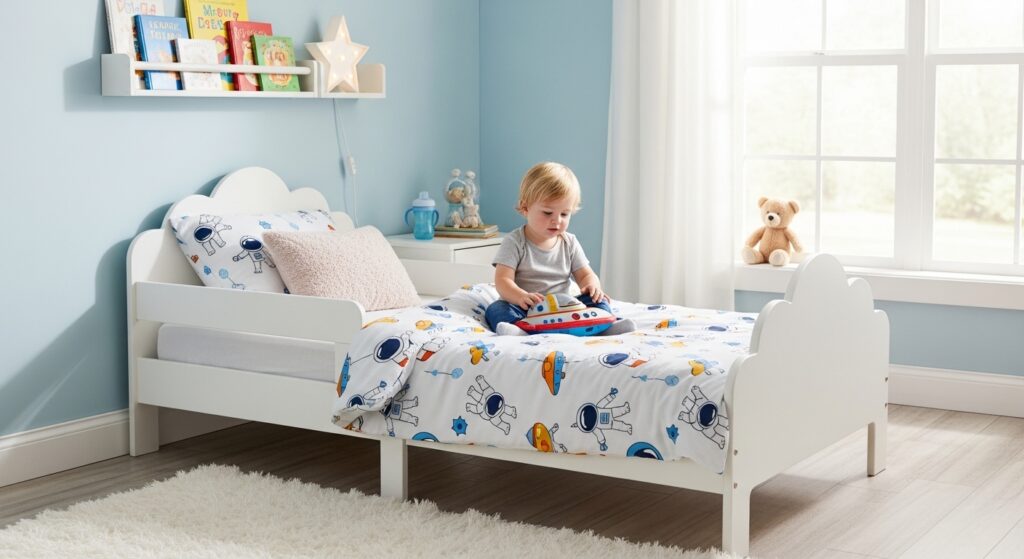
A toddler bed mattress width is often close to 36 inches.
Parents suddenly become very aware of measurements when transitioning kids out of cribs. A bed this size gives enough room for movement while still fitting comfortably into smaller bedrooms.
This measurement supports safety and efficient room arrangement, especially in apartments where every inch behaves like expensive real estate.Funny enough, toddlers still somehow manage sleeping positions resembling collapsed octopuses despite having plenty of space.
Shower Curtains
A standard shower curtain width panel section may measure around 36 inches, especially modular or split-panel designs.Bathrooms depend heavily on exact dimensions because moisture, movement, and accessibility all collide there in one slippery little room.
7
Good bathroom design supports universal design, safe movement, and proper clearance space. Tiny measurement mistakes in bathrooms somehow become huge annoyances incredibly fast.
Ever stepped out of a shower onto cold wet tiles because the curtain was too short? That’s not a mistake. That’s betrayal.
Golf Clubs, Hockey Sticks, and Lacrosse Sticks
Several forms of sports gear measurements hover around the 36-inch mark.
Junior or specialty golf clubs, shorter hockey sticks, and some lacrosse sticks frequently use dimensions near this range depending on player height and purpose.
In sports, sizing matters enormously for stability, balance, and performance. Proper sizing aligns with body proportions, including arm span, shoulder to fingertips, and natural posture.
That’s why coaches obsess over measurements even when players just wanna hit things dramatically.
Window Blinds
Many window blinds and shades come in 36-inch widths because it suits average residential windows.
This size fits neatly into standardized home construction patterns and supports efficient modular assembly for manufacturers.
Blinds are kinda funny if you think about it. They’re basically adjustable sunlight fences.
Walking Stride

Here’s one people rarely think about.A comfortable adult walking stride can approach around 36 inches during natural movement, especially for taller individuals.
This connection between movement and dimension heavily influences human-centered design, sidewalk planning, and ergonomic dimensions.
Urban planners and architects study human movement carefully because spaces should cooperate with the body rather than fight it.Good design often goes unnoticed. Bad design makes you smack your elbow into things repeatedly while muttering tiny angry speeches.
A Yard of Fabric
Anyone involved in sewing, upholstery, or textiles instantly recognizes this one.A yard of fabric equals exactly 36 inches.
Fabric stores still rely heavily on yard measurements despite growing use of metric sizing. This overlap between imperial measurements and metric measurements creates occasional confusion but also reflects centuries of textile trade traditions.
In many DIY projects, knowing fabric yardage helps estimate curtain lengths, cushions, or upholstery needs without wasting material.Also, fabric shopping has this dangerous energy where people walk in needing one thing and leave imagining an entirely different life.
Why 36 Inches Is Everywhere in Design
If you’ve been wondering why 36 inches is common in design, the answer sits at the crossroads of human comfort and industrial practicality.
This measurement supports:
- Better accessibility standards
- Efficient room clearance
- Easier visualizing space
- Improved home spacing standards
- Comfortable human movement
- Standardized manufacturing
- Safer furniture layouts
It works because it matches the scale of ordinary human interaction. Around waist height. Around comfortable reach. Around natural motion.That’s why you’ll see it repeated in architectural measurements, furniture dimensions, and even sports equipment.
Humans unintentionally built whole environments around ourselves. Which sounds obvious till you think about it too long and start feeling like a carefully measured hamster.
How to Estimate 36 Inches Without a Ruler
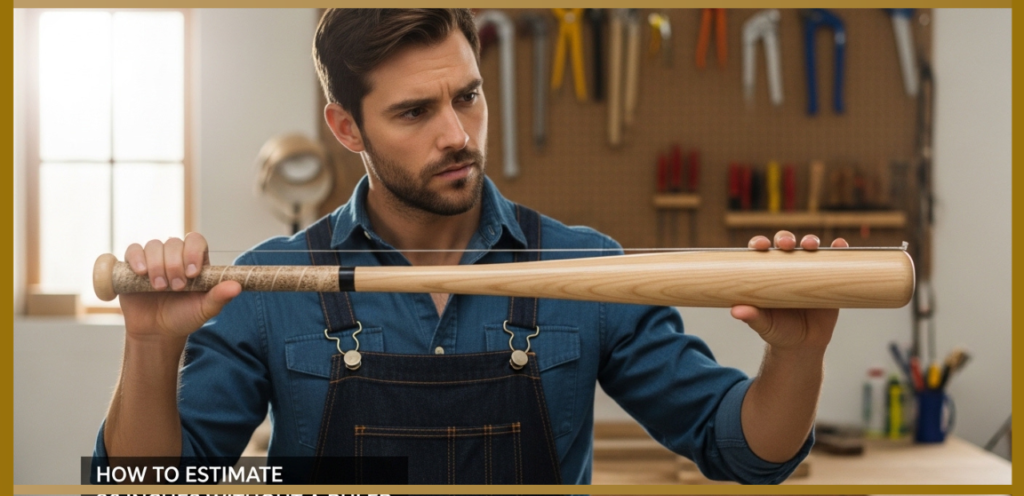
Sometimes you need quick visual measurement tricks.
Here are a few practical references:
- A standard countertop height
- A full acoustic guitar
- Three sheets of printer paper laid lengthwise
- A yardstick
- A large baseball bat
- Roughly the height from floor to many adults’ waist area
These everyday references help with estimating distance and measuring without a ruler, especially during quick home improvement or workshop tasks.
You’d be surprised how often humans guess measurements using body memory instead of exact math.Honestly, most people are just walking around using vibes and approximation held together by confidence.
Frequently Asked Question
36 inches tall
36 inches tall is equal to 3 feet in height. It’s about the height of a small child, a coffee table, or many kitchen counters.
36 inches
36 inches equals 3 feet or 1 yard. This measurement is commonly used in furniture, sports equipment, and home design.
36 in height
36 in height usually reaches around an adult’s waist or mid-thigh area. It’s considered a comfortable and practical height for many everyday objects.
what does 36 inches look like
36 inches looks about as long as a standard baseball bat or a large walking step. Visually, it’s close to the width of a doorway or the length of an acoustic guitar.
how big is 36 inches
36 inches is fairly large for household objects but still easy to imagine. It’s roughly the same as 3 ruler lengths placed together end to end.
Read this blog https://wittechyo.com/how-big-is-1-5-inches/
Final Thoughts on Common Things That Are 36 Inches Long
The interesting thing about common things that are 36 inches long is not really the objects themselves. It’s the hidden pattern behind them.This measurement quietly shapes homes, sports, tools, movement, comfort, and daily routines.
It appears in architecture because humans need room to breathe and move. It appears in instruments because bodies need balance and reach. It appears in furniture because spaces feel calmer when proportions make sense.
So the next time somebody asks, “what does 36 inches look like?”, you probably won’t imagine a ruler first.
You’ll picture a countertop.
A guitar.
A doorway.
A coffee table.
A baseball bat waiting under stadium lights.
And somehow, all of them together explain the measurement better than numbers ever could.