

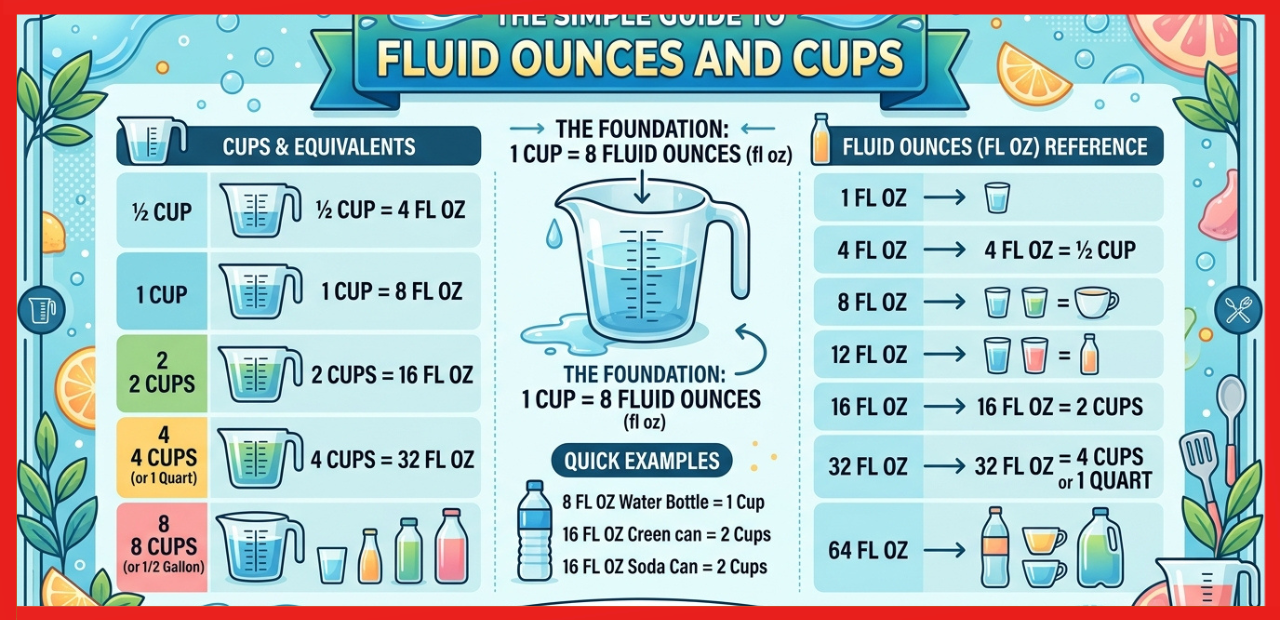
There is a tiny moment in almost every kitchen that feels oddly dramatic. You’re halfway through a recipe, the butter is soft, the oven is already warming, and suddenly the recipe says 6 fl oz while the measuring cup in your hand only shows cups.
Funny enough, that little pause has probably delayed more cakes than burnt sugar ever has. I know it has for me, and maybe for you too, even if we dont always admit it.
A good **oz to cups converter isn’t just another online tool. It’s one of those quiet helpers that makes cooking feel less like solving homework and more like creating something delicious.
Whether you’re baking cookies with your kids, making a weekend pancake breakfast, scaling a family recipe, or trying an international cookbook, understanding liquid measurement saves time, ingredients, and honestly… a bit of sanity.
This guide explains everything you need to know about fluid ounces (fl oz), cups, oz to cup conversion, and practical kitchen math.
By the end, you’ll probably stop searching every single time your recipe switches measurement units.
| Fluid Ounces (fl oz) | Cups |
|---|---|
| 1 fl oz | 1/8 cup |
| 2 fl oz | 1/4 cup |
| 4 fl oz | 1/2 cup |
| 6 fl oz | 3/4 cup |
| 8 fl oz | 1 cup |
| 12 fl oz | 1 1/2 cups |
| 16 fl oz | 2 cups |
| 24 fl oz | 3 cups |
| 32 fl oz | 4 cups |
What Is an Oz to Cups Converter?
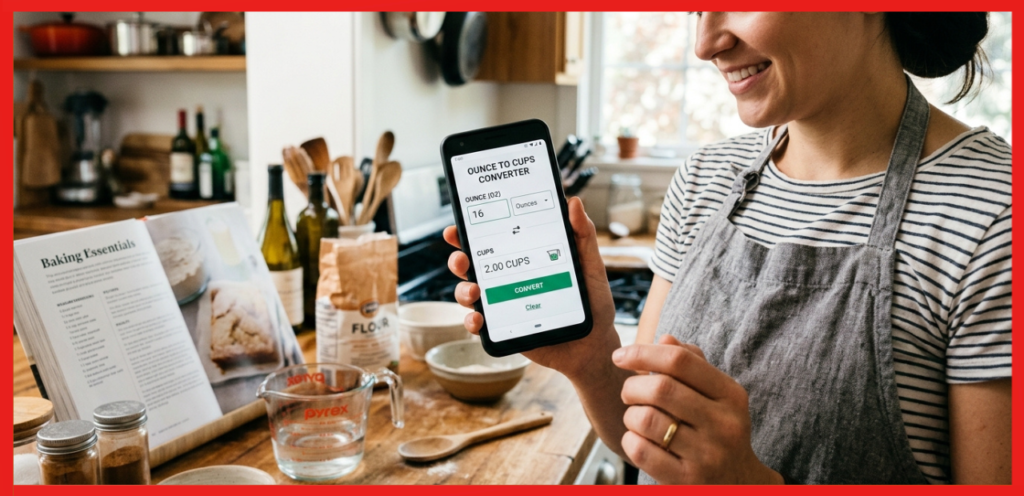
An oz to cups converter is a simple measurement calculator that changes fluid ounces (fl oz) into cups and back again. Instead of manually doing the math every time, it instantly provides the correct volume conversion.
People use an fl oz to cups calculator because recipes come from different countries and use different measuring systems. Some use ounces, while others rely on cups, milliliters, or liters.
It becomes especially useful for:
- Measuring milk for breakfast recipes
- Preparing soups
- Baking cakes
- Mixing pancake batter
- Scaling recipes for larger families
- Following online cooking videos
- Adjusting serving sizes
Think of it as your everyday kitchen conversion assistant rather than simply another calculator.
Understanding Fluid Ounces and Cups
One mistake people make is assuming every ounce means weight. It doesn’t.
A fluid ounce measures volume.
An ounce used for weighing flour or sugar measures mass.
That tiny difference changes everything.
For liquids like water, milk, coffee, broth, juice, and oil, recipes almost always refer to fluid ounces (fl oz).
A cup is another unit of volume measurement, commonly used throughout the United States.
The standard US customary cup contains exactly 8 fluid ounces.
That gives us the most important formula:
1 fl oz = 0.125 cup
Or the reverse:
1 cup = 8 fl oz
Once that sticks in your mind, many conversions become surprisingly easy.
Oz to Cups Conversion Formula
The formula couldn’t really be simpler.
Convert oz to cups
Cups = Fluid Ounces ÷ 8
Or…
Convert cups to oz
Fluid Ounces = Cups × 8
This basic fluid ounce conversion works for nearly every American recipe using the US legal cup or US customary cup.
Oz to Cups Conversion Chart

Here’s a quick conversion chart you can bookmark for everyday recipe conversion.
| Fluid Ounces (fl oz) | Cups |
|---|---|
| 1 fl oz = 0.125 cup | ⅛ cup |
| 2 fl oz = 0.25 cup | ¼ cup |
| 3 fl oz = 0.375 cup | ⅜ cup |
| 4 fl oz = 0.5 cup | ½ cup |
| 5 fl oz = 0.625 cup | ⅝ cup |
| 6 fl oz = 0.75 cup | ¾ cup |
| 7 fl oz = 0.875 cup | ⅞ cup |
| 8 fl oz = 1 cup | 1 cup |
| 16 fl oz = 2 cups | 2 cups |
| 20 fl oz = 2.5 cups | 2½ cups |
| 24 fl oz = 3 cups | 3 cups |
| 32 fl oz = 4 cups | 4 cups |
| 40 fl oz = 5 cups | 5 cups |
This ounces to cups conversion chart covers the measurements most people use while cooking.
Common Oz to Cups Conversions Everyone Searches
Some measurements appear so often that they’re worth memorizing.
6 oz to Cups
Many recipes ask for six ounces of milk.
6 oz = 0.75 cup
That’s exactly ¾ cup.
8 oz Equals How Many Cups?
This is easily the most searched conversion.
8 oz equals 1 cup.
Simple enough, but people still double-check because recipes matter.
16 oz to Cups
Need sixteen ounces?
16 oz = 2 cups.
Great for soups, sauces, and drink recipes.
20 oz to Cups
Large beverage recipes often need this.
20 oz = 2.5 cups.
How Many Fluid Ounces in a Cup?
There are 8 fluid ounces in one cup using the American measurement system.
How Many Cups in an Ounce?
There are 0.125 cups in one fluid ounce.
Cups to Oz Conversion Chart
Sometimes the recipe goes the opposite direction.
Here’s a handy cups to ounces conversion chart.
| Cups | Fluid Ounces |
|---|---|
| ¼ cup | 2 fl oz |
| ½ cup | 4 fl oz |
| ¾ cup | 6 fl oz |
| 1 cup | 8 fl oz |
| 1½ cups | 12 fl oz |
| 2 cups | 16 fl oz |
| 2.5 cups to ounces | 20 fl oz |
| 3 cups | 24 fl oz |
| 4 cups | 32 fl oz |
| 5 cups | 40 fl oz |
This also works as a quick cups to fluid ounces calculator when you don’t want to do mental math.
Why Cooking Measurements Matter
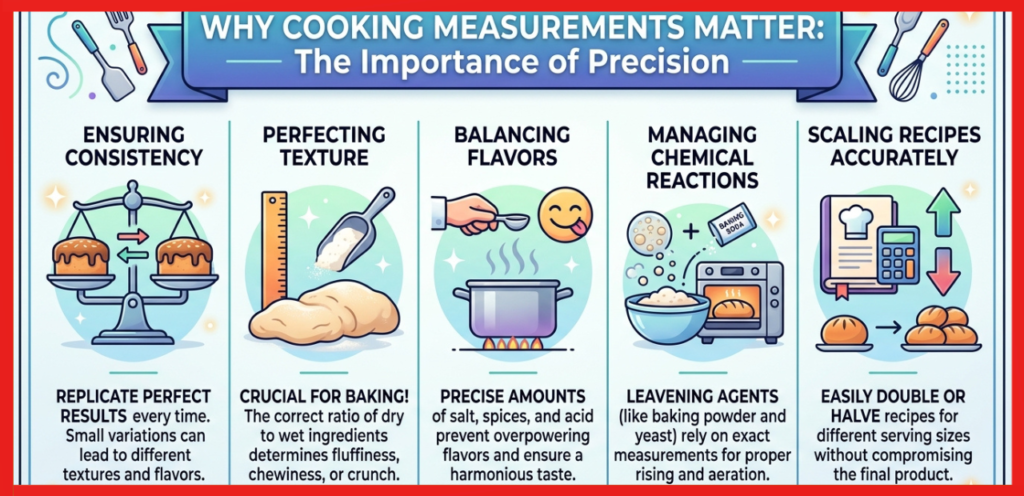
Some recipes forgive mistakes.
Others… not so much.
Adding an extra splash of broth to soup isn’t usually a disaster.
Adding too much milk while baking muffins? Thats another story entirely.
Accurate cooking measurements improve:
- Cake texture
- Bread structure
- Pancake consistency
- Sauce thickness
- Beverage flavor
- Recipe scaling
- Ingredient ratios
That’s why experienced home bakers often keep both measuring cups and digital scales nearby.
Baking Measurements Need More Precision
Unlike everyday cooking, baking measurements depend heavily on exact proportions.
A tiny error in liquid ingredients changes how flour absorbs moisture.
Imagine preparing a birthday cake.
The recipe requests 20 ounces of milk.
Without an oz to cups converter, someone might accidentally pour three cups instead of 2.5 cups.
The result?
The batter becomes thinner than expected, baking times change, and the finished cake may sink in the center.
Little conversions quietly make big differences.
Kitchen Conversion Beyond Cups and Ounces
A complete kitchen measurement converter often includes several units.
Common cooking units include:
- milliliters (ml)
- liters
- fluid ounce
- cup
- pint
- liquid pint
- metric cup
- coffee cup
Professional kitchens frequently combine multiple measurement systems within a single cookbook.
That’s why modern recipe calculator tools usually support many units at once.
US Cup vs Metric Cup
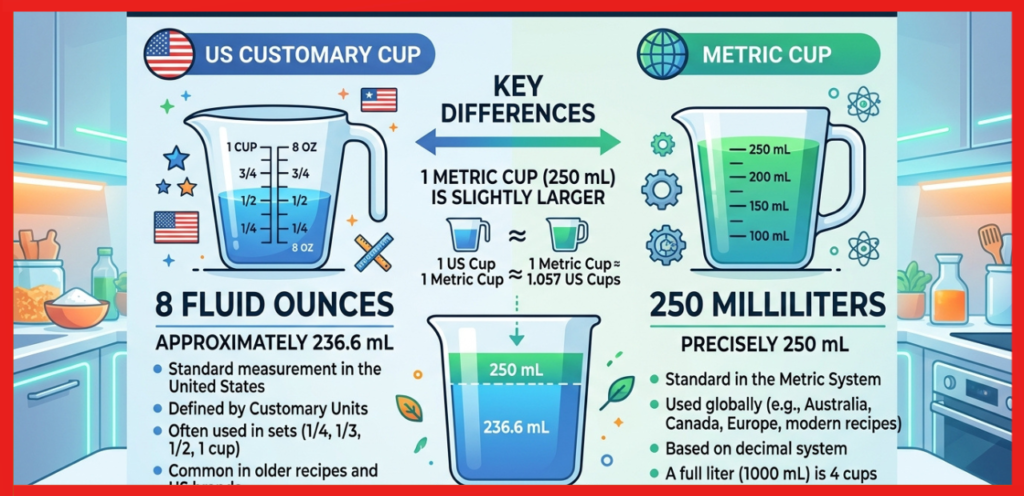
Not every cup around the world holds the same amount.
Here’s where things become slightly confusing.
| Measurement Standard | Cup Size |
|---|---|
| US legal cup | 240 ml |
| US customary cup | about 236.6 ml |
| Metric cup | 250 ml |
| United Kingdom cup | Rarely used officially today |
| Japanese cup | 200 ml |
Understanding US cup measurement versus metric cup conversion prevents mistakes when following international recipes.
Imperial Measurement vs Metric System
The Metric system uses liters and milliliters.
The imperial measurement system historically relied on ounces, pints, and gallons.
The United States still primarily uses the US customary system, while many countries prefer metric measurements.
Even within English-speaking countries, you’ll notice differences.
Recipes from the United Kingdom sometimes mention an imperial pint, while American recipes usually reference a liquid pint based on the US system.
Cooking Converter for Everyday Recipes
Imagine you’re making pancakes on a lazy Sunday morning.
Your grandmother’s handwritten recipe says:
“Use 12 fl oz milk.”
Your measuring jug only shows cups.
Instead of guessing, your cooking converter tells you:
12 fl oz = 1½ cups.
Now your pancake recipe comes together exactly as intended.
Some cooks even pair a pancake calculator with a cake pan converter when adjusting recipes for larger families.
It sounds fancy, but really it’s just practical kitchen math.
Kitchen Tools That Make Measuring Easier

A reliable kitchen calculator works best alongside proper measuring tools.
Helpful kitchen equipment includes:
- Measuring cups
- Liquid measuring jugs
- Measuring spoons
- Digital kitchen scale
- Glass measuring pitcher
- Recipe notebook
- Conversion chart on the refrigerator
These simple tools reduce mistakes during food preparation.
Recipe Scaling Without Guesswork
Doubling recipes often creates unexpected conversion problems.
Suppose your recipe needs:
- 10 fl oz cream
- 6 fl oz milk
- 4 fl oz oil
Double everything.
Instead of estimating, your recipe measurement converter quickly calculates:
- 20 fl oz
- 12 fl oz
- 8 fl oz
Then convert to cups.
The process becomes smooth instead of stressful.
That’s why many chefs keep a printable measurement chart nearby.
Food Labeling and Serving Sizes
You’ll also encounter ounces outside recipes.
Nutrition labels often list beverages in fluid ounces.
Understanding food labeling helps compare serving sizes.
For example:
- Water bottle
- Juice carton
- Coffee drink
- Soup container
Knowing volume equivalents makes portion planning easier.
Beyond Water: Different Liquid Ingredients
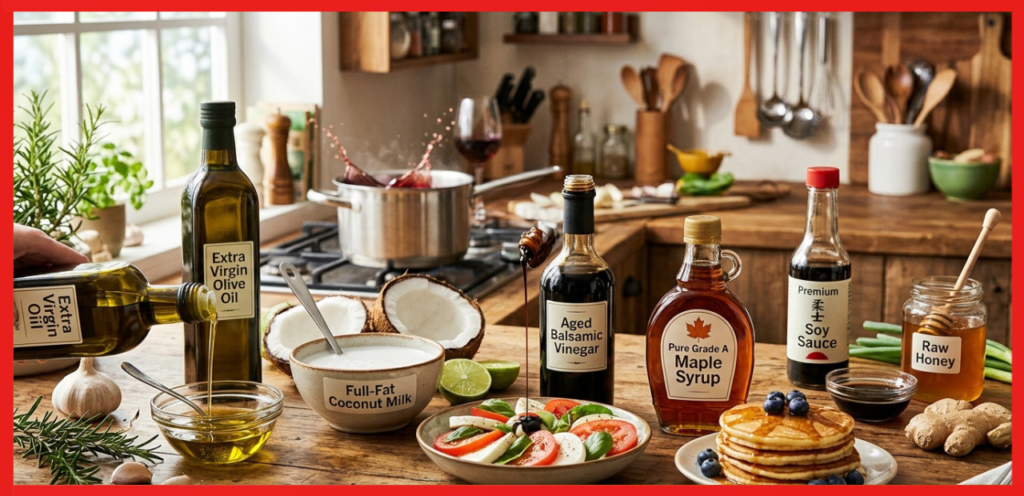
The conversion between cups and ounces stays the same for most liquid ingredients.
Examples include:
- Milk
- Coffee
- Oil
- Stock
- Juice
- Cream
- Vinegar
However, dry ingredients like flour, sugar, oats, or rice should not be converted using liquid volume alone because weight and volume differ.
That’s why ingredient measurement always depends on whether you’re measuring liquids or solids.
Frequently Asked Questions
How to Convert Oz to Cups?
Simply divide ounces by eight.
This is the easiest conversion formula.
How to Convert Cups to Oz?
Multiply cups by eight.
Are Fluid Ounces the Same as Ounces?
No.
A fluid ounce measures liquid volume.
A regular ounce often measures weight.
Can I Use This for Baking?
Absolutely.
This baking measurement converter works perfectly for liquids in cakes, cookies, muffins, brownies, and breads.
Is Every Cup the Same Size?
No.
Different countries use different standards, including the metric cup, Japanese cup, and US legal cup.
Quick Measurement Reference
Keep these popular measurement equivalents in mind.
| Conversion | Result |
|---|---|
| 1 cup | 8 fl oz |
| 2 cups | 16 fl oz |
| 3 cups | 24 fl oz |
| 4 cups | 32 fl oz |
| 5 cups | 40 fl oz |
| ½ cup | 4 fl oz |
| ¼ cup | 2 fl oz |
| ¾ cup | 6 fl oz |
This simple liquid conversion chart is useful for both beginners and experienced cooks.
Frequently Asked Question
oz to Cups
To convert oz to cups, divide the number of fluid ounces by 8. In the US measurement system, 8 fluid ounces equal 1 cup.
ounces to Cups
Converting ounces to cups is simple: 8 fluid ounces = 1 US cup. Just divide the ounces by 8 to find the equivalent number of cups.
oz to Cup
An oz to cup conversion depends on fluid ounces, with 1 cup equal to 8 fluid ounces. This makes it easy to convert recipes accurately.
How Many oz Are in a Cup
There are 8 fluid ounces in a US cup. This standard measurement is commonly used in cooking and baking recipes.
Cups to oz
To convert cups to oz, multiply the number of cups by 8. For example, 2 cups = 16 fluid ounces and 3 cups = 24 fluid ounces.
Read this blog https://wittechyo.com/how-long-is-300-fee/
Final Thoughts
Kitchen confidence rarely appears overnight. It arrives one recipe at a time, one tiny conversion after another. Today it might be wondering how many ounces in a cup, tomorrow it could be scaling a family soup recipe without even reaching for a calculator. Funny how those little victories pile up, isnt it?
A dependable oz to cups converter removes the guesswork from liquid measurement conversion, helping with cooking, baking, recipe preparation, and everyday food measurements.
Whether you’re using a fl oz to cups converter, checking a cup measurement chart, comparing US customary units with metric measurements, or planning larger serving sizes, understanding these culinary conversions makes every recipe feel a little more approachable.
Save this guide as your everyday measurement reference, and the next time a recipe asks for fluid ounces to cups or cups to fluid ounces, you’ll already know exactly what to do. Happy cooking, and may every recipe come together just the way you imagined… even if a tiny splash ends up where it wasn’t supposed to.